




































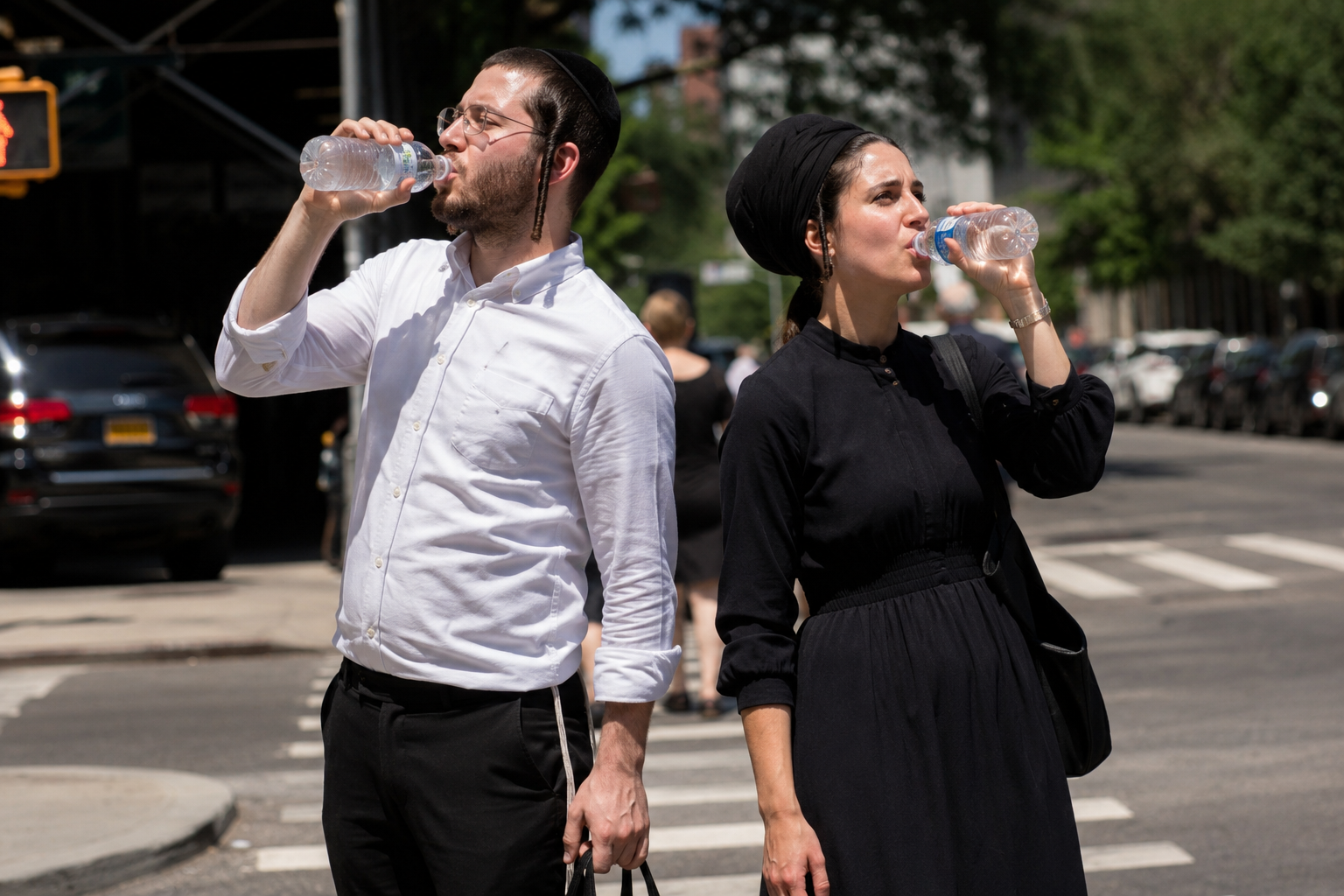
A heat wave is rolling in right as Tzom Tammuz hits the calendar this Thursday, July 2. That combination, a full day without food or water layered on top of dangerous temperatures, is exactly when heat illness catches people off guard. Here’s what actually keeps you safe, and how to get through the fast without wrecking yourself in the process.
Get Ahead of the Heat Before It Hits
The mistakes that land people in the ER almost always start the day before, not the day of. Drink water steadily through the day rather than waiting until you’re thirsty, and skip the alcohol, sugary drinks, and anything ice cold that tricks your body into thinking it’s cooled down when it hasn’t. Plan to be indoors in AC or deep shade during peak hours, roughly 11am to 6pm. If your home doesn’t have reliable air conditioning, a library, mall, or local cooling center works just as well.
Push anything physical, yard work, errands, exercise, to early morning or after sunset. Dress light: loose, light-colored, breathable clothing and a wide-brim hat if you’re outside for any stretch. A cool shower, a damp cloth on the neck and wrists, and a fan with the windows open all help bring your body temperature down fast when you need it.
And the one that should never need repeating: never leave anyone, child, adult, or pet, in a parked car. Not for a minute. Cars heat up faster and more dangerously than most people expect. If you have older neighbors, young kids, or anyone living alone or without AC nearby, check in on them twice a day during a stretch like this.
Tzom Tammuz During a Heat Wave: What to Actually Do
Tzom Tammuz is a minor fast, dawn to nightfall, no food or drink. That’s a very different physical situation than a normal hot day where you can keep hydrating. The safest move is simple: stay indoors in cool, air-conditioned space as much as possible for the duration of the fast. Every bit of heat exposure you avoid is fluid and energy you don’t have to make up for later.
A few practical adjustments for fast days that fall during a heat wave:
Hydrate hard beforehand. Start drinking water well before the fast begins at dawn, not just at the last minute. Building up fluid reserves the night before and at the pre-dawn meal matters more than anything you do once the fast starts.
Skip strenuous activity entirely. This isn’t the day for a workout, a long walk in the sun, or outdoor errands. Save physical exertion for after the fast ends.
Stay in AC, not just shade. Shade helps on a normal day, but during a fast when you can’t replace fluids, AC is the real difference maker. If shul isn’t air conditioned, that’s worth factoring into where you daven.
Know when the fast gives way to health. Halacha itself makes room for this: someone who is genuinely ill, feeling faint, or at real risk should speak with a rabbi about breaking the fast. Pregnant and nursing women are generally exempt already. Heat illness escalates fast, and a fast day is not worth a hospital visit. If in doubt, ask your rabbi before the fast, not while you’re already dizzy.
Break the fast slowly. Once nightfall hits, rehydrate gradually with water first rather than chugging something ice cold or sugary all at once.
Know the Warning Signs
Heat illness moves from uncomfortable to dangerous fast, and the two stages need very different responses.
Heat exhaustion looks like heavy sweating with cool, pale, clammy skin, headache, dizziness, nausea, muscle cramps, general weakness, and a fast, weak pulse. This calls for action, not panic: get the person to a cool, shaded or AC space, loosen clothing, and have them sip cool water if they’re not fasting or the fast has ended. Cool the skin with wet cloths, a cool shower, or a fan. If they’re not improving within 30 to 60 minutes, or they start vomiting, get medical help.
Heat stroke is a 911 call, full stop. Watch for skin that’s hot and red (sweating may actually stop), a body temperature of 103°F or higher, confusion, slurred speech, agitation, fainting, or seizures. Call 911 immediately, move the person somewhere cool, and cool them fast with cold water or ice packs on the neck, armpits, and groin. Do not give fluids to anyone who is confused or unconscious.
The Bottom Line
Heat illness escalates in minutes, not hours. A little planning, extra water beforehand, AC during peak hours, and knowing when to call it, turns a scary situation into a fast recovery. Stay smart through the fast, check on the people around you, and don’t be afraid to prioritize health over heat.
This guidance is based on general CDC and Red Cross recommendations and does not replace medical or halachic advice. When in doubt, cool the person down and call 911 or your local emergency number, and consult your rabbi with any questions about fasting.