




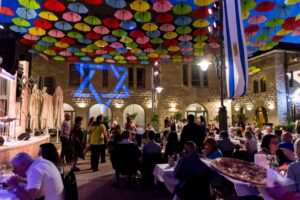
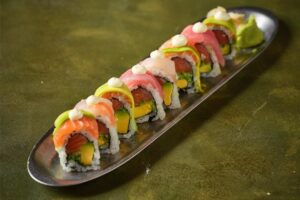


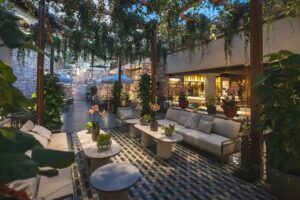












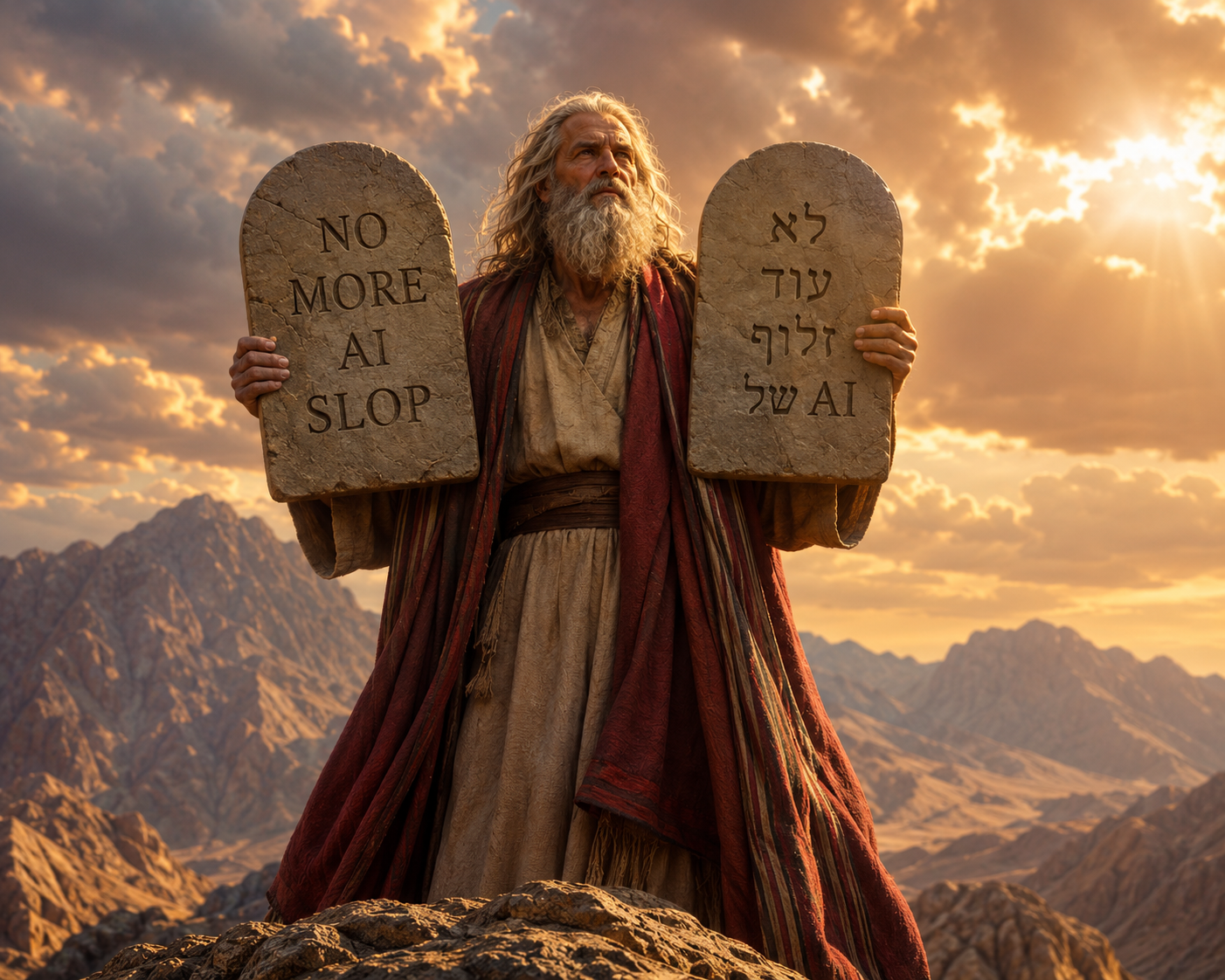
Open Instagram or WhatsApp and scroll through kosher restaurant promos for five minutes. The same glossy gradient backgrounds. The same overly symmetrical fonts. The same eerily smooth food photography that never quite looks like the actual dish. It is AI-generated, and at this point, every kosher consumer can spot it instantly.
Now open the promotional materials for some new Pesach programs or a kosher resort. A sprawling ballroom that looks like it was rendered for a video game. The pool deck bathed in light that does not exist in nature. The family gathered around a Seder table where every face is suspiciously symmetrical and no one looks like they actually know each other. Same problem, much higher stakes.
This is not a restaurant-only issue. Across the kosher world, from neighborhood takeout spots to luxury Pesach programs charging thousands of dollars per person, AI-generated imagery and video have become the default marketing tool. And it is quietly doing real damage to real brands.
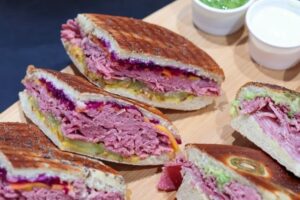
To be clear upfront: this is not a callout of any specific business, program, or operator. There is no list being kept and no fingers being pointed. The issue is industry-wide, and the advice applies universally. If anything, food businesses need to hear it most. Food is inherently, unavoidably visual. What your dishes actually look like is part of the product. Swapping real photos of real food for AI imagery that has never touched a plate is not a shortcut. It is a misfire that customers will notice before they ever walk through the door. One fellow food content creator told me directly that she won’t order from a business that uses AI images for their food instead of real photos, as she can’t actually verify what the business is actually making.
This is not coming from someone who is anti-AI. With over 20 years of marketing experience and an MBA, AI tools are part of my day-to-day workflow, used for research, drafting, organizing, and speeding up the unglamorous parts of the job. That experience is exactly why my warning here matters. AI is excellent at compressing time on tasks that do not require showcasing something real and authentic. Marketing, promotions, and branding are among those tasks. The moment creativity gets fully offloaded to a machine that is generating the statistically most likely output based on everything it has already seen, the result is not original, it is average. Do this across an entire industry and the outcome is predictable: a sea of sameness, where every kosher business starts to visually blur into the next.
It Doesn’t Save as Much Time as It Costs
Yes, AI design tools are fast and cheap. A flyer that might have taken a graphic designer a few days and a few hundred dollars can be generated in seconds for free or close to it. That tradeoff looks appealing on paper. But the time saved upfront often gets eaten right back up. Owners end up regenerating prompts over and over trying to get something that does not look generic, then second guessing fonts and colors that an AI tool chose somewhat arbitrarily, then asking friends and family for opinions because nothing about the design feels intentional. A human designer who understands the brand gets it right faster because they are not guessing.
In two decades of marketing work, the lesson has been consistent: AI is a phenomenal accelerant for the parts of a project that do not need a perspective, things like summarizing data, drafting a first pass of copy, or organizing a campaign timeline. It is a poor substitute for the parts of a project where the entire value is the perspective itself. A logo is not a task to complete. It is a decision about how a business wants to be seen forever. Handing that decision to a tool that has no opinion, no memory of the brand, and no stake in the outcome is where the real cost shows up, not in dollars saved today but in identity lost long term.
For Pesach Programs and Resorts, the Stakes Are Even Higher
A kosher restaurant using a generic AI flyer is making a branding mistake. A Pesach program using AI-generated imagery to sell a $15,000 family vacation is doing something closer to misrepresentation.
Pesach programs live and die on trust. Families are not buying a meal, they are committing their entire Yom Tov to an operator they are trusting to deliver on every promise: the food, the atmosphere, the programming, the feel of the room on Leil HaSeder. When the promotional video shows a grand ballroom glowing with golden light, immaculate table settings, and a crowd of photogenic guests who clearly do not exist, and the actual experience does not match that fantasy, the damage is immediate and lasting. Word travels fast in the kosher world. A disappointed family does not stay quiet.
Kosher resorts face the same credibility trap. AI-generated pool scenes, beach imagery, and hotel lobbies are becoming easy to identify, and travelers who arrive expecting one thing and find another do not come back. Real photography of a real property, even if the property is modest, builds the kind of trust that fills rooms year after year. Manufactured imagery, no matter how polished, does the opposite.
It Erases the One Thing These Businesses Have Going for Them
A kosher restaurant, caterer, or Pesach program is almost never competing on price or convenience against the broader market. The advantage is personality. It is the operator’s story, the family atmosphere, the sense that real people with real stakes built this experience. Generic AI visuals flatten all of that into the same sterile aesthetic that could belong to a generic all-inclusive, a corporate conference center, or a competitor running an identical program at a different resort. A brand that looks like everyone else gives a customer zero reason to choose it, let alone return.
Pesach programs in particular have historically differentiated on the strength of their reputation and their visual identity. The iconic programs with staying power have recognizable aesthetics, real photography of real guests, and a consistency across their materials that communicates stability and investment. Swapping all of that for AI-generated content signals the opposite: that the operator is cutting corners before the program even starts.
Kosher Menus Are Starting to Look Identical
Walk into enough kosher restaurants and a pattern emerges. The same clean sans-serif fonts. The same two-column layout. The same muted earth tone color palette. The same little icons indicating dairy, meat, or pareve. The menus look like they came from the same template, because increasingly, they did.
AI-generated menu design has made it faster and cheaper than ever to produce something that looks professional on the surface. The problem is that it looks professional in exactly the same way as everyone else’s menu. There is no visual identity carried through from the logo. There is no design language that connects the menu to the restaurant’s decor, its name, or the experience it is trying to create. It is a functional document that could belong to any kosher establishment on any block in any city.
A menu is a touchpoint customers hold in their hands. It sets expectations before a single dish arrives. A well-designed menu, one that actually reflects the personality of the restaurant, primes a customer to enjoy the experience more. A generic AI-produced menu, indistinguishable from the one at the place down the street, does the opposite. It tells the customer, visually and immediately, that this place is just like every other place. That is not the message any restaurant should be sending.
Real menu design does not have to be expensive. A graphic designer working from an existing logo and brand colors can produce something distinct and reprinting-friendly for a modest budget. That investment pays off every time a customer sits down at a table.
AI Still Gets Kosher-Specific Details Wrong
Menus and food imagery are particularly risky, and this is where the no-specific-callout rule gets its biggest test, because almost every kosher food business is doing this to some degree right now. AI image generators are notorious for inventing food that looks plausible but is structurally wrong: mystery ingredients, garnishes that make no sense, plating that no kitchen would actually produce. A customer who orders a dish based on an AI-generated photo and receives something that looks nothing like it does not feel pleasantly surprised. They feel deceived.
For a kosher business, the risks compound further. A flyer advertising a dairy restaurant should never visually suggest meat dishes. A Pesach promotion should not include imagery that reads as chametz to a careful eye. AI tools have no concept of these distinctions because they were never trained to understand them. A human photographer shooting actual food from the actual kitchen will never make that mistake, and will produce something far more appetizing in the process. Real food, well photographed, will always outsell a perfect AI render of a dish that does not exist.
For resorts and programs, the risks extend into the venue itself. An AI-generated Seder scene might include decorative elements that are not kosher for Pesach. A promotional video for a glatt meat program might inadvertently show dairy-adjacent imagery. These are not hypothetical errors; they are exactly the kind of thing that happens when a tool with no understanding of halacha is generating visuals for a halachically precise consumer base.
Customers Notice, and Not in a Good Way
The kosher consumer base is online, online a lot, and increasingly literate in spotting AI output. Comments calling out obviously AI flyers, logos, and promotional videos are becoming routine on kosher social media pages and WhatsApp groups. Once a potential guest notices the artificiality, it colors how they see the operator. Did they not care enough to invest in real photography? Did they cut corners here, and where else are corners being cut? For a Pesach program asking families to spend significant money on trust alone, those questions are fatal.
Real guest photos, real venue photography, and real video from actual past programs are not just more authentic. They are more persuasive. A candid shot of actual guests at a Seder table will always outperform a perfect AI render of people who do not exist.
We noticed. Many examples on Instagram and WhatsApp in the last few weeks alone.
The Long Game Always Favors the Original
A logo, a set of brand photos, or a well-produced promotional video is not a one-time expense. It becomes the visual foundation a business builds on for years. AI-generated assets tend to age badly because they were never built on a coherent design system or a real identity, just a prompt result. A real designer or photographer builds something extendable: a visual language with actual rules, real imagery that can be refreshed season to season, and a brand presence that communicates permanence rather than improvisation.
For Pesach programs that run annually, this is especially true. Operators who invest in real creative work build recognizable brands that guests return to. Operators who rely on AI-generated visuals look like they spun up a program last week, regardless of how many years they have actually been running.
Your Menu Is Not a Template
Walk into ten different kosher restaurants right now and ask to see the menu. Odds are strong that at least half of them were designed with the same AI tool, and it shows. The same font pairings. The same category dividers. The same decorative flourishes in the corners. The same hierarchy of sections laid out in the same order. They look less like individual restaurant menus and more like variations of the same file with different dish names dropped in.
A menu is not just a list of what you serve. It is a sales tool, a brand statement, and often the first physical object a customer interacts with inside your restaurant. It should reflect the personality of the place: the typography, the layout, the way dishes are described, the design choices that make someone feel like they are somewhere specific rather than anywhere. AI menu generators cannot do that because they have no idea what makes your restaurant yours. They produce the most statistically common version of a kosher menu, which is exactly what every other operator using the same tool is also getting.
Hire a graphic designer. Work with a copywriter on dish descriptions if needed. Spend the time. A well-designed menu is one of the highest-return investments a restaurant can make, and unlike an AI-generated one, it will not look identical to the place down the block.
The Bottom Line
Kosher businesses of every size have built reputations on the personal touch, on word of mouth, on the sense that a real person with real standards is behind the operation. None of that comes through in a flyer, a logo, a menu, or a promotional video that looks like it was generated by the same tool being used by a thousand other businesses with zero connection to kosher food or community.
Use AI where it actually helps: drafting text, brainstorming concepts, speeding up logistics. But put a real designer, a real photographer, and real creative judgment on the work that represents your brand to the public. Whether you are running a neighborhood takeout spot or a Pesach program with hundreds of guests, the investment is not optional. It is the difference between a brand people remember and a business that blends into the background.
SEND THIS ARTICLE TO YOUR FAVORITE RESTAURANT USING AI