












































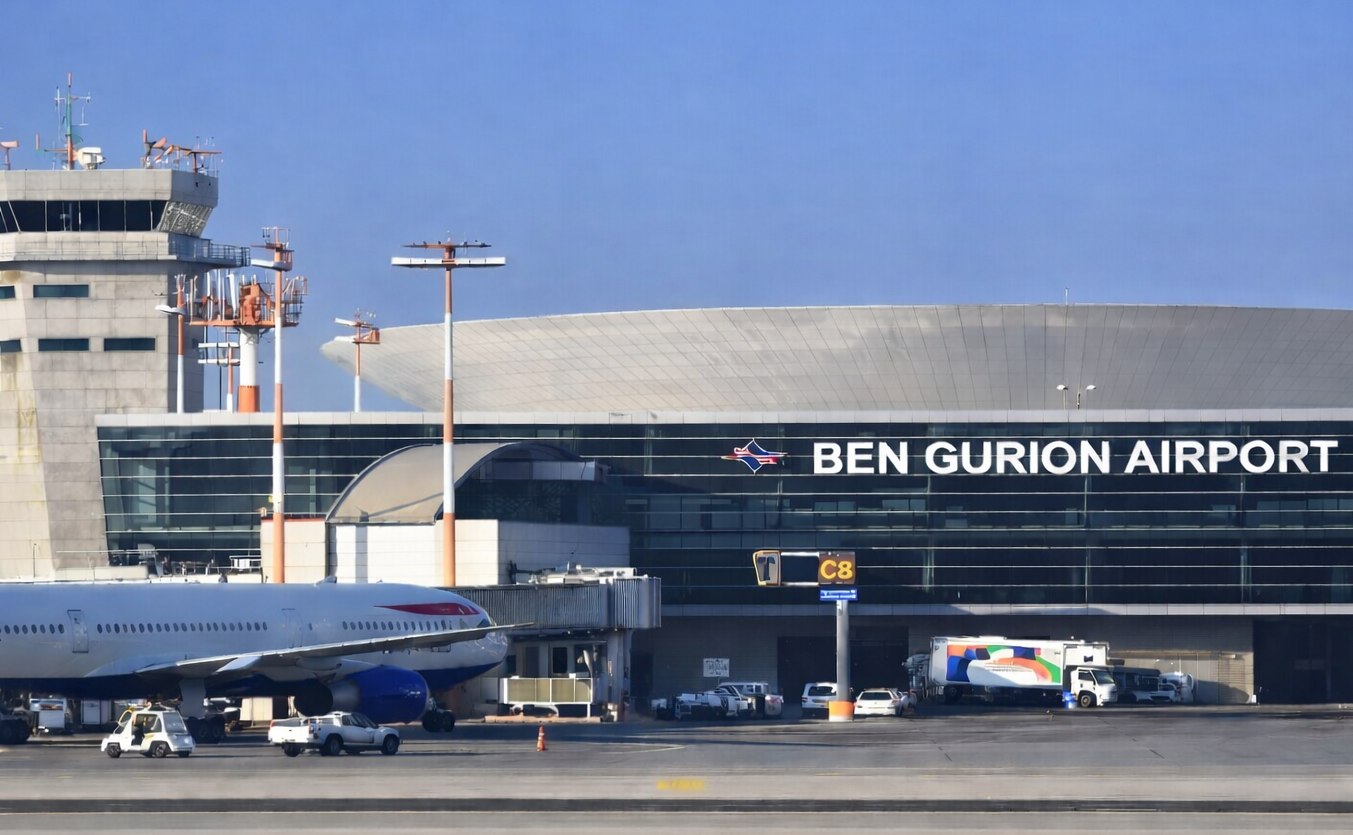
The warning has become the reality. Heading into the busiest travel stretch of the summer, Ben Gurion is already running behind, with average departure delays hovering around 40 minutes last week and stretching far longer during peak hours. If you are flying to or from Israel this August, plan for lines and plan for delays, because they are here now, not looming somewhere on the horizon.
For the observant traveler, this is not an abstract labor story. August is peak bein hazmanim, peak family travel, and peak “cutting it close before Shabbos” season. Whatever the underlying cause, a Ben Gurion running behind schedule lands directly on the people reading this.
What Is Actually Happening at the Airport
Ben Gurion is moving through one of its most difficult summers in memory, with only about one third of departures leaving within fifteen minutes of schedule. More than 12,000 flights operated through the airport in July alone. Over the past week the average departure delay ran around 40 minutes, and the worst window was the 2 p.m. hour, when the average delay climbed to roughly 83 minutes. Some carriers have been hit harder than others, with a few Greece and Cyprus routes averaging well over 90 minutes.
The trouble is not one problem, it is several stacked on top of each other. Ben Gurion is running near the top of its capacity, passenger volumes are ahead of pre-pandemic levels, and the terminal and runway layout has not grown to match. A single delayed inbound flight ties up a gate or a bus position and forces the next aircraft to wait, so delays compound through the day.
The US Military Aircraft on the Tarmac
The biggest single complication right now is not staffing, it is hardware. Roughly 33 US military refueling tankers are parked at Ben Gurion, taking up parking positions and running frequent takeoffs and landings of their own. Their planned departure was postponed amid the security escalation with Iran, and they continue to place heavy pressure on the flight schedule. Military aircraft get priority for ground handling and air traffic services, which pushes commercial flights further back in the queue. Officials have cautioned that the arrival of even one more tanker could force outright cancellations.
Layer onto that congestion in Greek airspace, which has scrambled schedules for the many summer flights routing through Greece and Cyprus, and you have a system with very little slack anywhere in it.
The Staffing Warning Behind the Numbers
Running underneath all of this is the labor dispute that first raised the alarm. According to reporting by Dean Fischer, Pinchas Idan, who chairs the Israel Airports Authority Workers’ Committee, has warned that the authority is short about 400 workers and is struggling to recruit and retain staff, and that long lines are likely throughout August.
Idan is a known quantity here. He has been at the center of previous Ben Gurion labor flashpoints and has repeatedly framed slowdowns as a manpower problem rather than a coordinated work action. The practical effect on your travel day is the same either way: fewer hands at check-in, security, and baggage means slower everything, and a system this stretched has no margin to absorb it.
What the Airport Is Saying
The Israel Airports Authority has pushed back on the union’s framing. The authority disputes a staffing shortage of the scale described, says Ben Gurion is operating normally, and points to roughly 90,000 to 100,000 passengers a day moving through without the breakdown the committee predicts.
So you have the familiar split: the workers’ committee says the system is stretched to breaking, management says it is under control, and the delay data sits somewhere in between and very much real. Travelers do not get to wait for that argument to resolve. You are the one in the terminal if the worse case holds, so you plan for it.
What This Means for Kosher Travelers
The Shabbat factor is what separates our readers from the general traveling public. El Al and the Israeli carriers do not fly on Shabbos, which means a delayed or badly timed Thursday or Friday flight is not a minor inconvenience. Miss the window and you are not catching the next flight in two hours, you are potentially stranded until Motzei Shabbat, scrambling for a place to stay, a kosher meal, and a way to keep Shabbos far from where you planned to be. With average delays already running 40 minutes and worse in the afternoon, a tight Friday itinerary is a genuine risk this month.
Families traveling with a lot of luggage, strollers, and young children feel every added minute of a slow line. And travelers connecting through Ben Gurion to a final destination have the least margin of all, because a slow departure eats directly into an already tight connection.
How to Protect Your Travel Plans
You cannot fix Ben Gurion’s tarmac or its staffing. You can control your own margins. A few practical moves for August:
- Arrive early and mean it. Three hours before an international departure is the floor this summer, not a suggestion. Sundays and Thursdays are historically the heaviest days, and the early morning and mid-afternoon windows are running the worst delays.
- Build a real Shabbat buffer. If you have any choice in scheduling, do not book the last possible Friday flight home. Give yourself a full extra day so a delay is a headache and not a crisis. If you are already booked tight, know your fallback now: where you would stay, what is walkable, and where kosher food is available near the airport.
- Avoid the 2 p.m. crunch if you can. The data points to early afternoon as the single worst window right now. A morning departure or a late-evening one will usually beat the peak.
- Travel light where you can. Carry-on instead of checked luggage removes you from the part of the operation most exposed to baggage-handling slowdowns. During past Ben Gurion crunches, airport officials themselves urged departing travelers to bring only carry-on.
- Check your flight the morning you fly. Delay counts have been running high all summer, and the situation shifts week to week with the military aircraft and the security picture. Your airline’s app will tell you more than any headline about whether your specific flight is affected.
- Consider a fast-track service for the vulnerable legs. If you are traveling with elderly parents, young children, or a genuinely tight connection, a VIP or express escort through security and passport control can be the difference between making Shabbos at home and not. In a summer this congested, it functions as travel insurance.
The Bottom Line
The union warned of an August crunch, and while management disputes the staffing figure, the delays are already on the board. Between a short-staffed workforce, a tarmac full of US military aircraft, and airspace congestion feeding through the schedule, the safe assumption for anyone flying kosher this August is to plan as if the lines will be long, protect your Shabbat margin above everything else, and give yourself the buffer that makes a bad travel day survivable instead of ruinous. We will update this if the situation escalates.