Browse > Home /

| Login | Subscribe via | RSS


Africa Asia Australia Canada Europe Israel Latin America United States

Keeping Kosher in Taipei, Taiwan

September 7th, 2011 | 5 Comments | Posted in Asia, China, Taiwan by Abe

Contributed by: Abe S. | Last Date of Travel: August 2008

Kosher Info:

Taipei Taiwan kosher

When I visited Taipei for several weeks, I had an apartment with a kitchen which made things much easier. Finding kosher food in Taipei is a bit difficult but very possible.

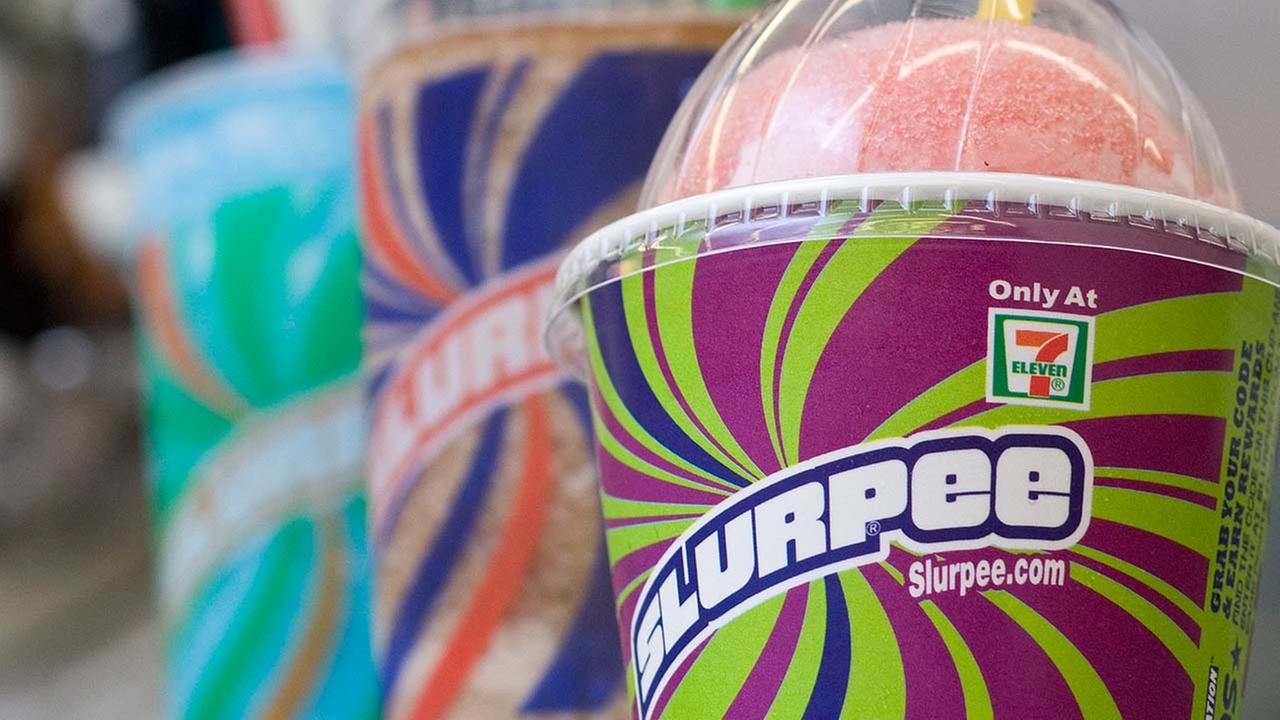
Starbucks, 7-Eleven, and Haagen-Dazs are all very popular chains in Taipei (and other large East Asian cities), where it is usually possible to buy kosher snacks with a hechsher (coffee, ice cream, chips). Most supermarkets will carry a small number of Western goods, only some of which are made in the U.S. (and therefore carry a hechsher).

The easiest place to buy kosher groceries is at a supermarket chain called Jasons. There are a number of them in the greater Taipei metro area, most notably in Taipei 101, which was briefly the tallest building in the world. Jasons is probably most similar to Whole Foods in the U.S. and it carries a very wide selection of international goods including many familiar kosher brands from the U.S. (like Lenders Bagels, cereal, etc).

Additionally, strict vegan Buddhist restaurants are also extremely common and can be distinguished by a swastika on display. Swastikas here do not refer to Nazis at all.

More »


Follow YeahThatsKosher on Twitter
Tags: , , , ,

---

Promoted Websites

• Find your cheap car rental, airport car hire, car rental reviews and coupons. •


Kosher Chinese Restaurants · 洁净中国餐馆 · מסעדות סיניות כשרות

December 24th, 2009 | 8 Comments | Posted in Belgium, Blog, Canada, Europe, France, Israel, United Kingdom, USA by Dani Klein - Admin

There is now a silly tradition that many Americans hold Christmastime each year… to indulge in Chinese cuisine. Since the Chinese do not celebrate Christmas, like us Jews, their restaurants have no need to take a hiatus on Xmas day.

In honor of this wacky tradition, we’ve compiled a list of Chinese restaurants (both sit-down & take-out) for your convenience.
Chinese-Food-Sign

  • NORTH AMERICA
    Annie Chan’s Restaurant
    190-11 Union Turnpike
    (off 190th Street)
    Fresh Meadows, NY 11366


    Bamboo Garden Vegetarian Cuisine
    364 Roy Street
    Seattle, WA USA 98109
    www.bamboogarden.net

    Chai Peking
    2205 Lavista Road Northeast
    Atlanta, GA 30329
    www.chaipeking.com

    China Bistro
    3565 NE 207th Street
    (The Waterways)
    Aventura, FL 33180

    China Glatt
    4413 13th Avenue
    (Between 44th & 45th St.)
    Brooklyn, NY 11219

    Chopstix
    172 West Englewood Avenue
    Teaneck, NJ 07666
    www.chopstixusa.com

    Chopstix
    478 Pleasant Valley Way
    West Orange, NJ 07052
    www.chopstixusa.com

    ChoSen Garden
    64-43 108th Street
    (Bet. 64th Rd. & 65th Rd.)
    Forest Hills, NY 11375

    ChoSen Island
    367 Central Avenue
    (Cor. of Central Ave. & Frost Lane)
    Lawrence, NY 11559

    ChoSen Village
    505 Middle Neck Road
    Great Neck, NY 11023

    Dragon Inn Glatt Kosher
    7638 Castor Ave
    Philadelphia, PA 19152

    Eden Wok Manhattan
    43 East 34th Street
    (Bet. Park & Madison Ave)
    New York, NY 10016
    www.edenwok.com

    Eden Wok Westchester
    1327 North Avenue
    (Northfield & Quaker Ridge Rd.)
    New Rochelle, NY 10804
    www.edenwok.com

    Ernie & Ellie
    6900 Decarie Blvd.
    (Decor De’Carie Square- enter through Venezia)
    Montreal, QC
    H3X 2T8, Canada

    Golden Chopsticks
    7000 Bathurst Street
    Vaughan, ON L4J, Canada
    www.goldenchopstick.ca

    Grand Bamboo
    106 Route 59
    (Corner Route 306)
    Monsey, NY 10952

    Hunan
    557 Kings Highway
    Brooklyn, NY 11223

    King Solomon’s Table
    3705 Chesswood Drive,
    North York, ON
    M3J 2P6, Canada
    www.kingsolomonstable.com

    Mr. Chopstik
    4020 Royal Palm Ave
    Miami Beach, FL 33140

    Royal Dragon
    4832 Boiling Brook Pkwy
    Rockville, MD 20852
    www.royalkosherrestaurant.com/royaldragon.htm

    Shangchai
    2189 Flatbush Ave
    Brooklyn, NY 11234

    Shanghai Diamond Garden
    9401 West Pico Blvd.
    Los Angeles, CA 90035

    Singapore Chinese Vegetarian *
    1006 Race Street
    Philadelphia, PA 19107-2306
    www.singaporevegetarian.com
    (*this place is vegan / vegetarian and is open on Shabbat)

    Tein Li Chow
    2485 Howard
    Evanston, Illinois
    www.teinlichow.com

    Wok ‘n Take Out
    455 Route 306
    Wesley Hills, NY 10952
    www.wokntakeout.com

    Wok Tov
    594 Central Avenue
    Cedarhurst, NY 11516

    Yi-Tzi Peking
    145 Montgomery Avenue
    Bala Cynwyd, PA 19004
    www.yitzipeking.com

  • EUROPE
    Blue Lagoon
    Lange Herentalsestraat 70
    2018 Antwerp, Belgium

    Kaifeng
    51 Church Road
    Hendon, NW4 4DU
    England, UK

    Missada
    45, rue Laugier
    75017 Paris
    France

  • ISRAEL

    Canton
    The Tayelet Hotel
    6 Gad Machnes Street
    Netanya , Israel
    (Kosher Rabanut)
    www.chinese.co.il

    Chai Tai
    Moshav Hutzot Hagolan
    Katzrin, Israel
    (Kosher Rabanut)

    The Chinese Wall
    26 Mikve Israel St
    Tel Aviv, Israel
    (Kosher Rabanut)

    China-Lee
    7 Montifyori St
    Tel Aviv, Israel
    (Glatt Kosher)

    Korussin
    Malha Shopping Center
    Jerusalem, Israel
    (Kosher Mehadrin)

    Lemon Grass
    Azrieli Shopping Center
    Tel Aviv, Israel
    (Kosher Rabanut)

    Lemon Grass
    22 Even Gvirol St
    Tel Aviv, Israel
    (Kosher Rabanut)

    Ming Ling
    12 Herzel
    Tel Aviv, Israel
    (Kosher Rabanut)

    Pikansin
    Azrieli Mall ~ 1st floor
    Tel Aviv, Israel
    (Kosher Rabanut)

    Tokyo Bankok
    40 Ainstain St
    Ramat Aviv Shopping Center
    Tel Aviv, Israel
    (Kosher Rabanut)

    Tuch Food
    48 Menahem Begin Road St
    Tel Aviv, Israel
    (Kosher Rabanut)

    Yosi Pekin
    15 Keren Kayemet St
    Jerusalem, Israel
    (Kosher Rabanut)

  • CHINA
    Dini’s Kosher Restaurant
    Nuren Jie Xingba Lu Jiuba Jie
    Beijing, China

And now here is a funny video about Jews, Chinese food, and Xmas for you to enjoy.


Follow YeahThatsKosher on Twitter
Tags: , , , , , , , , , , , , , , , , , , , , , , , , , , , , , , , , , , , , , , , , , , , , , , , , ,

---

Promoted Websites

• Find your cheap car rental, airport car hire, car rental reviews and coupons. •


Focus on: CHINA

March 2nd, 2009 | No Comments | Posted in Asia, China by Dani Klein - Admin

China is becoming a global power in many industries, and many more kosher observant travelers and businessmen are heading over there each year.

Here are a few articles on keeping kosher in China that we felt appropriate to share on YeahThatsKosher.com:

    Keeping Kosher while Traveling in China

    WildChina.com | February 11, 2009

    Keeping kosher can always be a bit tricky, especially while traveling. But like in every developing country, awareness towards other religions and cultures is increasing (slowly, but surely). We hope you find these Kosher tid-bits useful during your Chinese travels.

    1. Kosher products are available at small western stores throughout Beijing, such as Jenny Lou’s.

    2. Kosher chickens can be bought at the German Butchery. (8610) 6591 9370 First Floor, Binduyuan Building No 15 Zaoying Beili Maizidian, Chao Yang District, Beijing.

    3. Chicken, beef, and lamb can be bought at Chabad Hashgacha. Catering and delivery of kosher meals can be arranged through Chabad for individuals (24 hours notice is required) or tour groups (two weeks notice is required. http://www.chabadbeijing.com

    4. Dini’s is the first kosher restaurant to open in Beijing. They’ll also vacuum-pack meals for you to eat on your travels around China. (8610) 6461 6220 or visit www.kosherbeijing.com

    5. Kosher Bagels under Chabad Hashgacha are available through Mrs Shanens Bagels. Ask for the Kosher Bagels and they are delivered free to your hotel/home/office (8610) 6435 9561.

    6. China is known for its wide array of fruits and vegetables! This is a chance to become familiar with all these different choices and indulge in plenty of vitamins.

FACT: Did you know China is now the world’s fastest-growing producer of kosher-certified food, with more than 500 Chinese factories producing the approved products??!!

    The Challenge of Keeping China Kosher

    The country is a fast-growing producer of kosher-certified food. But inspection and approval require a cultural balancing act — how do you explain the Book of Leviticus in an atheist nation?
    By Ching-Ching Ni, Los Angeles Times Staff Writer
    February 5, 2008

    It isn’t easy being a kosher food inspector in the land of moo shu pork. No matter how hard you try.

    “Once, they got me into a restaurant and they ordered a whole plate of food and put it in front of me,” recalls Rabbi Martin Grunberg, who has the unusual task of ensuring that Chinese factories that make food for export comply with ancient Jewish dietary laws. “They were putting me to the test because they really don’t understand why I can’t eat Chinese cuisine.”

    Keeping kosher is a breeze back home in Jerusalem, but it’s a daily challenge here in China, where food is practically a religion and people say they’ll eat anything with four legs — except for the table. It means Grunberg can’t travel light on his monthly trips through China: He carries two or three suitcases packed with dry goods, canned meats and vacuum-sealed packets, so he can feed himself breakfast, lunch and dinner. That way, he never has to step into a Chinese restaurant where about the only thing he can order is a fruit plate and can of Coke.

    Although many here have never heard the word “kosher,” China is now the world’s fastest-growing producer of kosher-certified food, with more than 500 Chinese factories producing the approved products. That number is expected to soar, not because this country that is still officially atheist has embraced Judaism, but because it’s good for business.

    “I used to get this puzzled look, ‘What is kosher?’ ” said Grunberg, 54, a field inspector for the New York-based Orthodox Union, which is responsible for certifying more than 300 plants in China. “Now a lot of people know it as a marketing tool to increase their market share, especially in the United States.”

    The largest kosher market in the world is the U.S., where a growing number of the consumers are non-Jews who see kosher-certified food as generally safer and healthier.

    That’s important in China, which is trying to recover from the recent spate of tainted-food scandals. Eager to regain consumer trust, the “Made in China” label has found an unexpected ally in the once-obscure kosher symbol.

    “People have been looking for some other measure of security for products coming out of China,” said Rabbi Shimon Freundlich, one of a handful of Beijing-based independent kosher field inspectors. “They want to see quality control, and kosher is a standard people know.”

    As China in recent years has become a factory for the world, practically anything can be made here at a bargain. The unlikely kosher business flourished simply because of supply and demand: The global appetite for kosher products exploded and China is happy to feed the frenzy.

    But even after the Chinese learned basic kosher rules — no pork, no shellfish, no fish without fins or scales — misunderstandings remain.

    As the calls poured in from Chinese companies looking for kosher approval, Freundlich recalls explaining why he couldn’t certify a toy maker that produced plastic food.

    “They sent me samples of fake apples, fake vegetables,” Freundlich said. “They were right about the food aspect. They didn’t know we don’t do wooden toys or plastic toys.”

    Then there was the guy who makes dining room tables.

    “Since food goes on the table he thought we needed a kosher table,” Freundlich said. “Of course, every table is kosher.”

    It’s even hard for many Chinese to grasp the meaning of “rabbi.”

    “Sometimes they call me ‘rabbit,’ ” Grunberg said. “I start hopping. They don’t get it. I let it pass. It doesn’t pay to explain.”

    In the frigid Chinese winter, Grunberg, a grandfather of five, keeps his white beard relatively short and covers his head with a wool hat. He keeps his yarmulke in his pocket and puts it on only when the room is warm enough. The Israeli resident has long given up on wearing his wide-brimmed black hat when traveling across China. “They get squashed,” he said, during the extended transits by plane, bus and train.

    It’s harder for Freundlich, 34, to blend in. His black beard is much longer and bushier, and some Chinese he meets can’t resist tugging at it with their fingers.

    “They used to call me Santa Claus,” said Freundlich, who moved to Beijing with his family in 2001 to start a Jewish community center. Then came the Sept. 11 attacks. “They started calling me Bin Laden, which is unfortunate.”

    But they don’t mean any harm by it, he said. For the most part, rabbis are treated with respect, even if the Chinese know very little about the Jewish people and their religion.

    “In China, we have very little contact with the Jewish people,” said Lucy Qian, the general manager at Ningbo Gooddays Food, a factory that makes mostly novelty candies here in one of China’s manufacturing hubs. “We are doing this purely because of market demand.”

    Since the factory went kosher a few years ago, sales have soared 40%, she said. Her primary customers are Israelis and Americans who want such things as kosher lipstick-shaped Barbie candy, some of which ends up on the shelves of places like Wal-Mart.

    The tainted-food scandals, she said, had no impact on her business last year. In fact, sales grew.

    “I’m sure the kosher certification helped,” Qian said.

    For now, finished products such as candy, fish and some dehydrated vegetables are a small component of the Chinese-made kosher market. The bulk of the business is in raw materials and food additives, but that is likely to change very soon, according to the Orthodox Union, which expects huge growth in the demand for kosher snacks, soft drinks and even beef.

    Jewish dietary rules originate in the Hebrew Bible, particularly the Book of Leviticus. But rabbis working in China try to sidestep serious discussions on religion to avoid political minefields in a country where anything other than state-sanctioned church activities are strictly forbidden.

    Once, Grunberg said, an official asked him during a public function to explain what religious law kosher is based on. Caught off guard, the rabbi quickly emphasized the common ground between the Chinese and Jewish people, who share long histories of pride and persecution.

    “I didn’t bring religion or God into the equation,” Grunberg said.

    That’s just fine to pragmatic Communist Party officials, who see little contradiction in describing their brand of unbridled capitalism as “socialism with Chinese characteristics.” Tolerating unfamiliar foreign ideas seems a small price to keep the export-driven economy humming.

    “The biggest benefit of going kosher is that it introduces more accountability,” said Ray Cheung, a Chinese broker who acts as a bridge between Chinese companies seeking kosher approval and Jewish agencies that certify them. “The rabbi inspectors need to know where each ingredient is made and be able to trace it back to the factory that made it. If you don’t provide that information, we don’t give you the certification.”

    Certification can be labor-intensive for the rabbis.

    During a recent trip to the Gooddays candy factory, which requires four annual inspections, Grunberg checked long lists of raw materials and poked around every warehouse and factory floor, picking up bottles of sweetener and food coloring, asking if there had been any changes in the suppliers and if the buckets on the floor were used to store anything other than kosher products.

    Sometimes, despite the best of intentions, he has to turn the applicant down.

    Once, he said, he traveled to far western China to watch Tibetan herders using a primitive method to turn yak milk into casein, a dairy protein used as a food additive.

    “It was like a million Tibetans all privately cooking this on their stoves — every home is a little factory,” Grunberg said. “It would be an impossible type of supervision.”

    Then the Chinese government stepped in to form a company that supplied the Tibetans with cows and a place to milk them by machine. Grunberg went back and certified the liquid milk that will be used for the casein.

    The rabbi’s requirements don’t always go over well with productivity-crazed Chinese plant owners.

    “Somebody once called me and asked me to come bless the fish,” said Freundlich, referring to a company that processes Alaskan fish for the American market.

    “I told him that’s not the way it works.”

    But even Freundlich wasn’t prepared for what he faced when he got to the fish plant.

    Jewish law says fish must have fins and scales to be kosher. But with frozen fish, it is difficult to tell which ones do. So even though the plant had processed thousands of fish, Freundlich says he rolled up his sleeves to check them by hand. He and a partner worked three days straight, scratching each one of the 37,000 fish with their gloved fingers.

    So many fish in the sea look the same,” said Freundlich. “If I can’t find the scale or the fin, it can’t be eaten.”

    Related Posts Plugin for WordPress, Blogger...
    Follow YeahThatsKosher on Twitter
    Tags: , , , , , , ,

    ---

    Promoted Websites

    • Find your cheap car rental, airport car hire, car rental reviews and coupons. •