




































You spend thousands of dollars, fly halfway across the world, and trust that someone has done the hard work of putting together a legitimate Passover program. You show up expecting matzah at the Seder. You expect edible food. You expect basic safety. What happened at the Marvaco Pesach Program at the Zephyr Targa Hotel in Marrakesh this past Pesach was a failure on every single one of those counts, and the fallout is still unfolding.
The story came to light through a wave of social media posts, comment threads, and WhatsApp discussions among participants and influencers who attended the program. What they described was not a matter of high expectations meeting reality. It was a program that failed its guests at the most basic level, on the most important holiday on the Jewish calendar.
Everything reported here is based on firsthand accounts shared publicly by program participants across social media, comment sections, and WhatsApp threads. We have not independently verified each claim, and Marvaco Tours has not responded to a request for comment. This article reflects what attendees have stated publicly, and readers should weigh it accordingly.
The Advertising Did Not Match Reality
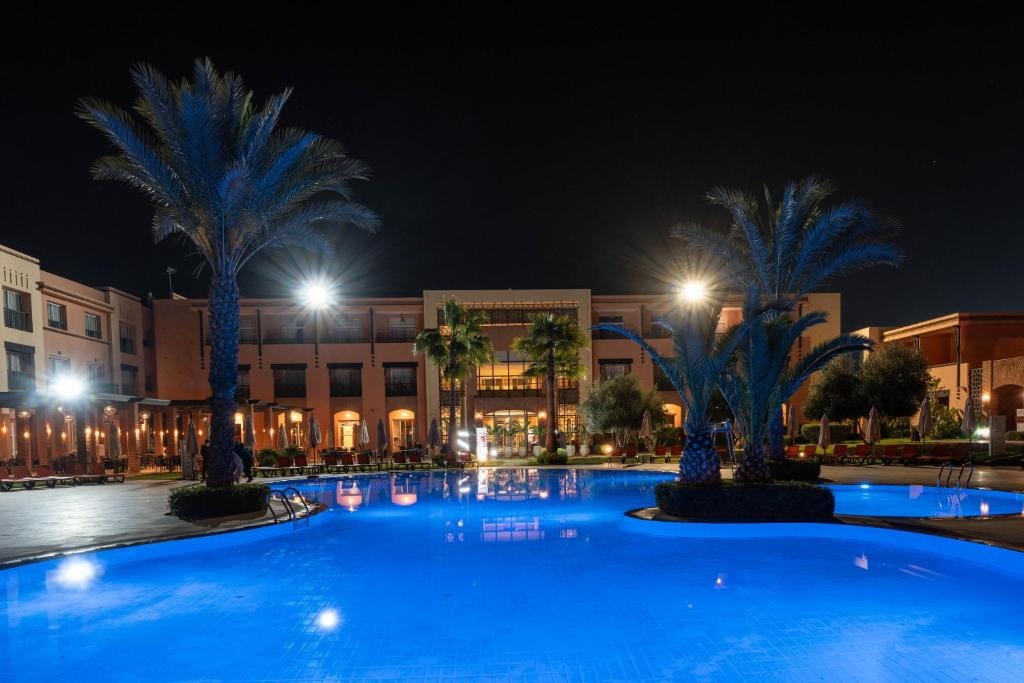
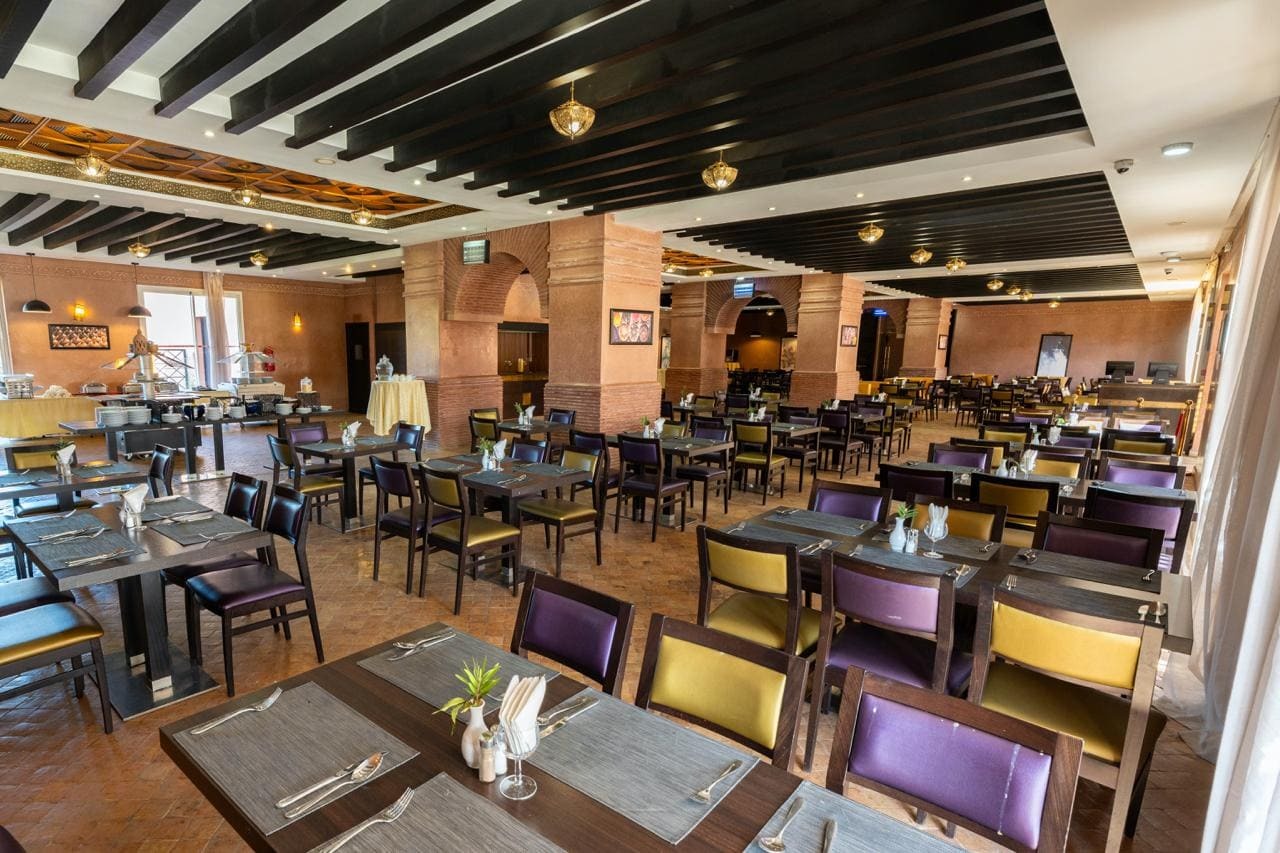
Marvaco sold itself as a luxury family Passover experience in Marrakesh. The Instagram account @marvacopesachprogram bills the program as “Luxury • Family • Tradition.” The marketing suggested a legitimate, organized, well-appointed program. What guests walked into was a rundown hotel covered in dirt. People who had looked up the Zephyr Targa Hotel before going had already tempered their expectations, but even those lowered expectations were not low enough. The gap between what was advertised and what existed was not a matter of nuance or spin. It was not accurate, and what followed confirmed it at every turn.
The First Seder: No Matzah, No Grape Juice, Missing Seder Items
The Seder is the entire point. It is the religious and spiritual centerpiece of Passover, not an optional amenity. At this program, attendees sat down to the first Seder without matzah. Without grape juice. With incomplete Seder plates.
One guest was sober and could not drink wine. Grape juice is not an unusual accommodation at a Passover program; it is standard. He spent the evening going room to room among fellow attendees hoping someone had privately packed some. Marvaco had none to offer him.
And yet, some guests were receiving things that others were told simply did not exist. Friends and family of the organizers, or guests who had tipped the waitstaff heavily, were quietly getting what they needed while paying guests were turned away empty-handed. That is not a logistical failure. That is a fundamental ethical failure. A two-tiered system was operating inside what guests understood to be an all-inclusive program.

The Food Was Not Just Bad. It Was Dangerous.
Bad food on a Passover program is disappointing. Rotting food is a public health issue. Guests at Marvaco were served food that was visibly spoiled. There is video documentation. Fish carcasses were piled up and then served. Mold was visible on camera. One attendee put it plainly in a public comment: there was not enough food for her friends’ kids, let alone adults.
There were no snacks for the children. Basic dietary needs were not being met. When people on a Passover program are starving, it stops being a hospitality complaint. Passover is eight days (outside of Israel). There is nowhere else to go for food. You cannot walk to a local restaurant on Yom Tov, and in a location far from any kosher alternative, you are entirely dependent on the program. That dependency is exactly what made this situation so dangerous.
Also, a major kashrut flag: pita bread was found in the kitchen, and while not served to guests, an obvious major chametz issue that violates the core tenets of the holiday.
The Rooms: Mold, Theft, and Broken Keycards
The physical conditions at the Zephyr Targa added another layer of failure. Rooms were described as moldy, or unbearably hot or cold. Room key cards stopped working after a single use, even when guests were careful to keep them away from phones. Personal items were stolen from rooms. Guests who had paid significant money to be there were dealing with conditions that would be unacceptable at a budget property, let alone at a program charging Passover-program prices.

A Predator on the Premises, and Management Blamed the Victims
A man at the program was looking into women’s rooms. When guests reported this to Marvaco management, the response was not to remove him. The response, documented publicly by multiple attendees, was: “Maybe tell your girls to dress away from the windows.”
He was not removed. Women and families were left to manage their own safety in the face of a known, ongoing problem that management chose not to address. This is not a hospitality failure. This is a potential legal and criminal matter, and management’s victim-blaming response compounded it significantly.
Guests Were Held at Risk of Arrest
When it became clear how badly Marvaco had failed, some guests who had paid deposits refused to pay the remaining balance before leaving. The organizers’ response was to threaten to call Moroccan police on guests who would not settle their bill in full before departing.
The owners knew what had happened on their premises. They never apologized. Instead, according to attendees, the owner at one point stood up and gave an emotional speech about having a son in Israel, apparently an attempt to generate sympathy. When guests pushed back on paying for an experience that had failed them at every level, guards were reportedly stationed to prevent departure without a signed slip confirming full payment.
In a foreign country that is not easy to exit quickly, with no support structure standing by, this was not an empty threat. Guests who had survived eight days of spoiled food, stolen belongings, unsafe conditions, and management indifference were being coerced into paying in full before they could go home.
A WhatsApp group now exists with many of the attendees coordinating next steps. Legal action is being discussed. A beit din complaint is reportedly among the options on the table, and given the ethical and religious dimensions of what occurred, that may be the most appropriate path forward.
How to Protect Yourself: A Complete Guide to Vetting a Passover Program
The Passover program industry is largely unregulated. There is no licensing requirement to run one, no government body overseeing standards, and no mandatory consumer protections specific to the space. A bad actor can register a social media account, produce attractive content, collect deposits, and disappear, or worse, show up and run something like Marvaco. The responsibility for due diligence falls almost entirely on you. Here is how to do it properly.
There is no guaranteed way to avoid a bad experience entirely, but asking the right questions before you book goes a long way. The precautions below will not make you immune to a dishonest operator, but they will make it considerably harder for one to catch you off guard.
Questions to Ask the Organizer Before You Book
Do not accept a brochure as an answer. Get on the phone with the program organizer and ask direct questions. One of the most important things to establish upfront: has this organizer run a program at this specific property before, and have they run programs in this country before? An organizer with no prior relationship with the hotel, no familiarity with local suppliers, and no experience navigating kosher logistics in that country is starting from zero in a place where the margin for error is extremely thin. Ask how many years the program has been running, and ask for contact information for past attendees you can speak with directly. If they have never run a program at this property or in this destination before, find out exactly how they are planning to handle matzah supply, hashgacha, and kosher kitchen setup, and listen carefully to how confidently and specifically they answer.
Also ask: Who specifically is the mashgiach, and is that person on-site for the full duration of the program or only for some meals? What is the full legal name of the organizing company, and where is it registered? What happens if the program is cancelled: is your deposit refundable, in what timeframe, and how? What is the specific policy if what is delivered materially differs from what was advertised?
Ask about matzah supply chains. This sounds almost absurdly basic, but as Marvaco demonstrated, it is not. Where is the matzah being sourced from? How is it being transported? What is the backup plan if a shipment is delayed? Ask about grape juice and non-alcoholic options, especially if anyone in your group does not drink. Ask about snacks and food availability outside of scheduled meal times, particularly if you are traveling with children.
If an organizer is evasive, irritated, or vague in response to any of these questions, that is your answer.
Red Flags in Advertising and Marketing
Glossy content is cheap to produce and tells you almost nothing about operational competence. The things worth scrutinizing are the things that are absent or vague. Does the program name a specific supervising rabbi, or does it say something general like “under rabbinical supervision” without attribution? Legitimate programs name their hashgacha clearly and prominently because it is a selling point. Vague language about supervision is a warning sign.
Does every photo on the program’s social media look like stock photography or heavily filtered lifestyle content, with no candid documentation of actual past programs? Established programs have years of real guest photos, real event footage, and real testimonials. A brand-new-looking account with polished imagery and no substantive history should trigger immediate scrutiny.
Be especially alert to programs that rely heavily on influencer promotion as their primary form of social proof. Watch the language around pricing and availability too. Programs that push urgency heavily, with only-a-few-spots-left messaging, constant countdown timers, and pressure to deposit quickly, without being transparent about exactly what you are getting for the money, should be approached with caution.
Ask for References
Any legitimate Passover program operator should be able to hand you a list of past attendees willing to speak on their behalf. Not a testimonials page on their own website, and not a curated set of Instagram comments, but actual names and contact information for real people you can reach out to independently. Ask for references specifically from the same destination or property you are considering, since an organizer who has run successful programs in Israel or Florida is not necessarily equipped to run one in Morocco. If they cannot produce references, or if the references they provide are vague, unresponsive, or suspiciously enthusiastic without any specific detail, treat that as a significant warning sign.
When you do speak to past attendees, ask pointed questions. Was the food what was advertised? Was the mashgiach present throughout? Were there any issues with the hotel, and how did the organizer handle them? Would they book with this operator again, and specifically at this property? People who had a genuinely good experience will tell you so with real detail. People who are hedging, glossing over problems, or keeping answers vague are also telling you something.
Additionally, are the references paid to be there (aka staff or an influencer)? That’s not to say that their word isn’t helpful, but they need to be up front about that relationship and disclose that fact – which gives them credibility. (Note: I’ve personally attended Passover programs as a partnership in order to promote the business, but I’ve always disclosed that relationship to not pretend that it is a 100% unbiased review).
How to Vet the Hotel Independently
The program organizer and the hotel are two separate entities, and you should research both separately. Get the exact name and address of the hotel. Look it up on Google, TripAdvisor, Booking.com, and any other travel review platform you can find. Read recent reviews, not just the top ones. Pay attention to reviews that mention cleanliness, room conditions, key card issues, temperature control, and theft. All of those were documented problems at the Zephyr Targa.
Look at the hotel’s own website and compare it to how the program is describing the property. If the program is calling it a luxury resort and the hotel’s own site suggests something considerably more modest, that gap is meaningful. Search for photos of the actual property on Google Images and compare them to the program’s marketing materials.
Check whether the hotel has hosted Passover programs before. A hotel that has never accommodated a large kosher program may have no understanding of what is operationally required. If the hotel is in a country where reviews may be sparse or unreliable, search Facebook groups, WhatsApp communities, or forum threads in kosher travel circles. The frum travel community talks. Someone has usually stayed there before.
Kashrut and Supervision Due Diligence
The hashgacha on a Passover program is not an afterthought. It is the entire foundation of the kashrut operation, and it needs to be verified, not assumed. Get the full name of the supervising rabbi or certifying agency. Then contact them independently, not through the program, to confirm that the supervision is real, active, and covers the full program including all meals, food preparation, and the kitchen.
Ask whether the mashgiach is on-site continuously or arrives only for certain meals. Some programs have a supervising rabbi who attends the Sedarim and select meals but is not present for the full food operation. That is a significantly weaker level of oversight than full-time on-site supervision, and you should know which one you are getting.
Ask specifically about the matzah. Is it being sourced from a reliable supplier with proper kosher l’Pesach certification? Is there shmurah matzah available for the Seder specifically? Ask about the status of the kitchen: is it being kashered for Pesach on-site, or is the program operating out of a dedicated kosher kitchen? These are not aggressive questions. Any legitimate program should be able to answer them without hesitation.
For programs in less common kosher destinations such as Morocco, Southeast Asia, or parts of Africa, the local kashrut infrastructure may be less established than in Israel, the US, or Western Europe. That does not make it impossible to run a legitimate program in these locations, but it does mean the burden of verification is higher, not lower.
What to Do If Things Go Wrong Mid-Program
Document everything from the moment something seems wrong. Photograph the food. Photograph the room conditions. Screenshot any communications with management. If you report a safety concern and management responds dismissively, document that response in writing if possible. If you can follow up a verbal complaint with a written message via WhatsApp or email so there is a record, do it. Obviously, photography and electronic documentation are not options on Shabbat or Yom Tov. On those days, write down what you witnessed by hand as soon as Shabbat or Yom Tov ends, while the details are still fresh, and document everything you can before and after those times.
Connect with other guests who are having the same experience. The WhatsApp group that formed after Marvaco was essential to coordinating a response and building a documented record. You are almost certainly not the only one dealing with what you are dealing with, and a collective account is considerably more powerful than individual complaints.
Contact your travel insurance provider as soon as possible if conditions have materially deviated from what was advertised. Many travel insurance policies include provisions for trip interruption or supplier failure. Read your policy before you travel so you know what is covered and what the claims process requires.
If a safety issue arises, whether a predator on the premises, a physical threat, or a coercive demand for payment, contact your country’s embassy or consulate. The US Embassy in Morocco has a 24-hour emergency line for American citizens. Know where it is before you need it. If you are being prevented from leaving or threatened with police, consular support is exactly what that line exists for.
If the organizer refuses to engage or resolves nothing, a beit din complaint is a legitimate and often effective avenue, particularly for a program run by observant Jews within the community. It carries real communal weight and creates a formal record. Legal action in the organizer’s home jurisdiction is also worth exploring, particularly if the program was marketed and sold from a specific US or Israeli address.
Travel Logistics and Exit Planning for Remote Destinations
Morocco is a beautiful country with a rich Jewish history, and there are legitimate, well-run Passover programs there. It is also not a place you can easily leave on short notice. Direct flights from the US are limited, routing through Europe adds time and cost, and during Yom Tov your ability to rebook or communicate is constrained. All of this is worth factoring in before you commit.
The further from home you go, and the harder the destination is to exit, the more leverage a bad operator has over you. Marvaco understood this. The threat to call police worked, in part, because leaving Morocco mid-Pesach was genuinely difficult and expensive for most guests. That leverage is real, and a bad actor will use it.
Before you travel to any exotic destination program, know the following: the address and contact number of your country’s nearest embassy or consulate; the local emergency services number; the name and direct contact of at least one person not affiliated with the program who is reachable if something goes wrong; and your travel insurance policy number and claims contact. Put all of it in a note on your phone before you board the plane.
Also consider what early departure would actually cost you. What are the change fees on your flights? Are there alternative routings home if your original return is not viable? If you had to leave tomorrow morning, what would that actually require? You hope you never need to answer that question. But knowing the answer in advance means you are making a free choice to stay or go, rather than feeling trapped because you never thought it through.
The Bottom Line
What happened at the Marvaco Pesach Program at the Zephyr Targa Hotel in Marrakesh was not a series of unfortunate coincidences. It was the predictable outcome of a program that should never have been allowed to operate: one that used luxury branding and influencer marketing to fill seats, failed to deliver basic Passover necessities, served dangerous food, allowed a predator to remain on premises after guests reported him, and then threatened guests with local police when they refused to pay for the disaster they had been put through.
The participants and influencers who brought these issues to light across social media and WhatsApp did the community a real service. These stories are uncomfortable to tell. But the alternative, silence, means Marvaco or something exactly like it resurfaces next Pesach with a fresh round of “Luxury • Family • Tradition” marketing, and someone else’s family sits down to a Seder with no matzah.
Morocco has legitimate, well-run Passover programs with strong track records and real rabbinic supervision. This is not an indictment of the destination. It is a reminder that no destination, no aesthetic, and no influencer endorsement substitutes for knowing exactly who is running the program you are paying to attend. Do the homework. Ask the hard questions. And if an organizer cannot answer them, walk away.