Browse > Home /

| Login | Subscribe via | RSS


Africa Asia Australia Canada Europe Israel Latin America United States

✈ Keeping Kosher in San Juan, PR

September 23rd, 2008 | 2 Comments | Posted in Latin America / Caribbean, Puerto Rico by Paul Hurwitz

Contributed by: Paul Hurwitz | Last Date of Travel: December 2006

Most tourists staying in San Juan actually stay in the nearby suburb of Carolina, which is near the airport.

Kosher Info:

The San Juan area does not have any kosher restaurants. But that doesn’t mean that you don’t have any options. Because PR is part of the US, the supermarkets do carry many US brands that are kosher, especially the Pueblo market in Carolina which has many tourists. Items you can purchase in Pueblo include (but are not limited to) frozen Empire chicken products, milk, Lactaid milk, juice, yogurt, cereal, bread and snacks. You can also order kosher meals for both weekday and Shabbat from Chabad of Puerto Rico. You can join the Chabad Rabbi, Rabbi Mendel Zarchi, and his family for Shabbat dinner. Make sure to order meals or arrange to join the Zarchis before your trip.
Tourist Info:

Because Puerto Rico is part of the US, Americans do not need a passport to vacation here. The currency is US Dollars.

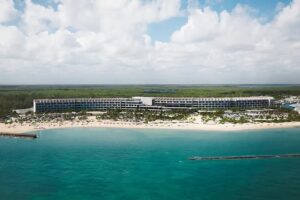
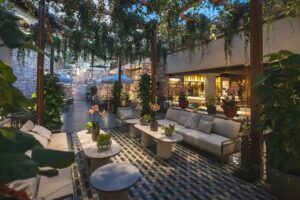
The time of year that you visit will have a big impact on how much a hotel costs per night. The peak season starts at the end of December and runs through mid-April. My wife and I went in the middle of December and saved $150 per night in our hotel because it was before the official peak season. There are many hotels in San Juan/Carolina to stay at and most are right on the beach. The hotels in Old San Juan are going to be more expensive than the ones in Carolina.

My wife and I stayed at the ESJ Towers (different from the El San Juan Hotel) and I cannot recommend it enough, especially for frum travellers. The owner of the hotel is a Jewish gentleman who is friends with the Chabad rabbi. One of the main reasons we chose this hotel is that each room has a full kitchen. This allowed us to bring a lot of our own food and cook in our room. The ESJ Towers is extremely accomodating to frum travellers. If you ask for new dishes, utensils and toaster oven for kashrut reasons, they will provide brand new items at no cost. All of the rooms use an electronic card key, but just leave it at the front desk when you leave the hotel on Shabbat and when you ask for your key they will send someone with you to open your room without you even needing to ask. Clearly this is a hotel that has had quite a few frum guests. We recommended this hotel to friends who went several months later and they had the same experience.

Things to do:

We only did activities in the northeast quarter of Puerto Rico, so these suggestions are from our experiences.

Old San Juan is an almost 500 year old neighborhood and contains many plazas that are interesting from an historical perspective. There are several forts in Old San Juan that are very impressive especially El Morro, the largest one. On Calle Christo, there is a Ben and Jerry’s Scoop shop. Plan to spend about half a day in Old San Juan. From Old San Juan you can take a ferry from Pier 2 across to Cantana and visit the Casa Bacardi Rum Distillery. The grounds are beautiful and you can take a tour and get 2 free drinks. Available in the gift store and nowhere else is a Premium Aged 12 year old rum for $70. I bought the 8 year old rum and love it. It can be compared to a nice aged single malt scotch.  If anyone goes and wants to bring me a bottle of the 12 year rum, I will be forever greatful.

Two more activities that we did and most people said cannot be missed are hiking in the El Yunque National Forest and kayaking in Fajardo Bay in the Northeast quarter of Puerto Rico.  El Yunque is the only tropical rain forest in the US Forest Service system.  You can choose to make your trip to El Yunque as short and easy as you want or go further up the hill and do some real hiking in the back part of the forest.  Remember to bring a poncho or raincoat, it can be raining in El Yunque and nowhere else on the island.  Cape San Juan Nature Reserve includes Laguna Grande in Fajardo.  Laguna Grande, also called the Bio Bay is one of about 15 bioluminescent bays in the world.  The water is full of micro-organisms that when agitated, at night, have a blue glow to them.  You can go on a kayak tour of the biobay.  You have two choices, to go on a tour that starts as its getting dark or a tour that starts once its already dark.  We took the tour that started as it was getting dark and we were extremely happy we did.  We got to see the surrounding areas and the flora and fauna as it was getting dark and then saw the glowing when it was completely dark.  We felt we would have missed a lot if we went on the one that started after dark.  The highlight for me was going swimming after it was dark and see the water glow around me.  Las Tortugas Adventures (http://kayak-pr.com/biobaytour.html) came highly recommended and we were very happy with them.

Of course you can’t forget to just relax and lay on the beach.

Jewish Info:

The Chabad shul in Carolina on Calle Rosa has daily minyan, as well as Shabbat minyan. There is usually sit-down kiddush on Shabbat morning that people make into lunch as well.  Chabad of Puerto Rico is a very useful website for contacting Chabad, tourist info and ordering food.


Follow YeahThatsKosher on Twitter
Tags: , , , , , , ,

---

Promoted Websites

• Find your cheap car rental, airport car hire, car rental reviews and coupons. •


✈ Keeping Kosher in Martinique

August 11th, 2008 | 3 Comments | Posted in Latin America / Caribbean, Martinique by George Medovoy

Contributed by George Medovoy | Last Date of Travel: July 2008

Kosher Info: You might not think of ever finding kosher food on the island of Martinique, a far-flung French outpost in the Caribbean archipelago with an eternal summer and an infectious African-Creole culture. But don’t be fooled — Martinique is also home to a community of 400 Jews mainly from Morocco and Tunisia, most of whom arrived on the island via France.

With typical self-sufficiency, Chabad runs a kosher food store on its premises, while a kosher restaurant operates out of the home of one of the community’s members.
To reach the rabbi and find out more about the hours of the store and the restaurant, it is best to call him directly on his cell.
If you call before you arrive, dial the international code first, 011, and then 596-696-7107-70.

Tourist Info: Jews have lived on Martinique since 1645, when the Portuguese expelled them from Brazil and they sought refuge on the island.
Today, Martinique is an official “department” of France, enjoying many of the modern economic and educational infrastructures of the French state.
When you arrive at Martinique’s Aime Cesaire International Airport, the flag you see is the French tricolor, the language spoken is French, and many of the shops you visit carry the latest French fashions and perfumes.

The Jews here are French citizens and work mostly in the building industry.
The 17th-century Jews who arrived here from Brazil brought the know-how for producing sugar cane, which Martinique uses to make Rhum Agricole, a high-quality product based on pure sugar cane juice rather than the more common molasses.

As our plane approached the airport, we could see sailboats off Martinique’s famous Diamond Rock – a far cry, I whispered to myself, from those early Jewish refugees who were expelled from Brazil and suddenly cast upon the open seas.

Touched in the west by the Caribbean Sea and in the east by the Atlantic Ocean, Martinique was discovered in 1502 by Columbus, who called it “the island of flowers.” We found it to be a fascinating blend of island and French cultures.

In the busy capital of Fort-de-France, your first exposure to native culture may come at the Grand Marche Couvert, the big covered market on rue Antoine Siger, where hawkers in colorful costumes sell everything from fresh vegetables and spices to herbal remedies to help you sleep.
You may also be lucky enough to hear the sounds of zouk, an island music that mixes a Latin beat with rhythms that reach back to Africa.

In spite of its relatively small size, it offers a surprisingly diverse geography, with lovely bays, coves and white sand beaches in the south, to rolling hills, mountains and even rainforests and cascading waterfalls in the north. Martinique is 425 square miles in size, 50 miles long at its longest, and just over 24 miles wide at its widest. Both coasts are dotted with magnificent ocean overlooks.

Martinique, known internationally for its production of rum, has 10 distilleries.
As our guide joked: “Don’t drink a lot, but drink often.” The country’s rums bear an official French classification — like the classification given to French wines — known as Appellation d’Origine Controlee. No other rum in the world carries this government standard.
White rum is the youngest, aged for as little as three months in wooden casks.
The longer the rum is aged in oak barrels, the darker its color – from amber to dark — and the more complex its taste. Old rum, sometimes aged for more than six years, can be as wonderful as an excellent cognac.

Rum is so tied to Martinique’s history that it has even been used to win military battles.
In 1804, the British captured a landmark rock off Martinique’s southern coast and named it as a ship, HMS Diamond Rock.
After many unsuccessful attempts to re-take the rock, the French dropped barrels of rum in the water and finally took it back…from drunken British soldiers!

For more information about Martinique, visit www.martinique.org or call (212) 838-7800.
The island is 429 miles southeast of Puerto Rico, with flights from Miami via San Juan. The temperature averages 79 degrees, with cooling from pleasant trade winds. Martinique’s official currency is the Euro.

Jewish Info: It is also one of the far-flung centers of Chabad, with a large, Sephardic-style synagogue in the university town of Schoelcher, just north of the busy capital of Fort-de-France.
Young Rabbi Moshe Yehuda Nemni, who is from London and speaks French, English, Hebrew and Yiddish, carries the Lubavitcher Rebbe’s torch here, promoting Jewish identity.

The synagogue, located at 12 Anse Gouraud in Schoelcher, also has a mikveh and a large social hall next door for social functions.
Religious services are held every day and draw at least 100 people on Saturday.
Visitors from abroad are warmly welcomed and often invited to either the rabbi’s house or the homes of individual members for Shabbat meals.
“Because we’re an island,” he said, “everything is limited, so we can’t depend on other towns around us. The only reason we are holding strong (here), is because the Rebbe told us to fight for Judaism…”
As my wife and I made our way to Chabad, we noticed several Jews with kippot who were walking to the synagogue for Friday evening services.

——————-

ABOUT THE AUTHOR:

George Medovoy is a travel writer who publishes an Internet travel magazine, www.PostcardsForYou.com, and writes a travel column for the Davis Enterprise in Northern California. He has also contributed freelance travel to numerous newspapers and magazines, including enRoute (Air Canada), American Way (American Airlines), Newsday, and the Forward.


Follow YeahThatsKosher on Twitter
Tags: , , , , , , , ,

---

Promoted Websites

• Find your cheap car rental, airport car hire, car rental reviews and coupons. •


✈ Keeping Kosher in Havana (Habana), Cuba

July 23rd, 2008 | 5 Comments | Posted in Cuba, Latin America / Caribbean by Noam Hazan
Contributed by: Noam Hazan | Last Date of Travel: June 2008

Kosher Info: If you’re planning a trip to Cuba anytime soon and you prefer not to starve then I would suggest you plan your trip very carefully! Prawns, lobster and calamarimay look appetising but they are not very kosher!

You have two options:

1: Buy lots of Osem packet soups, Nutri-Grain bars and crackers, but although we didn’t get checked it may be a little risky at customs.

2. When you get there buy a small little slow cooker or as some may call it, a cholent pot!

Beleieve it or not, its almost impossible for tourists to buy fruit or vegetables and even less likely to find a semi-stocked supermarket. All American products are banned and you probably won’t find anything with a hechsher (apart from Manchester Beit Din Pasta for some odd reason). Buying a slow cooker is perfect, not too expensive and it can also be used to heat water. Prepare yourselves for lots of Pasta, Spaghetti, Pasta and even more spaghetti! 

A good idea is to start a competition between your fellow travellers as to who can make the best dinner. This triggers competitiveness and will likely influence a larger variety of food – CAPITALISM woo hoo!!

Tourist Info: There is lots to see in Havana, but I wouldn’t recommend staying there for more then a couple of days since your so close to the beautiful Caribbean coast.

If you smoke, Cuba is the place for you! Smoking is allowed inside any public place including the famous cigar factories. Make sure that before you schlep half way around Havana looking for the cigar factory that actually exists, you must got to the Saratoga Hotel to buy your entry tickets.

Although buying Cuban cigars is a lot cheaper in Cuba then anywhere else it still isn’t THAT cheap. Ask your factory tour guide (quietly) if he/she will meet up with you after hours to get a better price but don’t pay more then $50 for a box of 25 and make sure it has all the correct stickers and stamps on the box!! The cigars that are offered in the street are likely to be fake. Cubans are good and fetch for over $800 in Ben-Gurion Airport’s duty free (I’ve checked).

Museums: Cuban Museum Guide

Cuba’s tourist office (including the Lonely Planet’s) description of their museums are entirely glamorized. The Museum of the Revolution is interesting but the exhibits are old, badly translated and very long!

The Chocolate Museum is not a museum! it’s is a cafe that serves types of chocolate and has some posters on the wall about the history of chocolate. Once you manage to squeeze past the coffee tables to get to the posters you then realize that you don’t speak Spanish and can’t understand a thing!

Car Museum: There are much better cars in the street so save your money!

Night Life:

In Cuba its all about Salsa, so a lesson or two would not do you any harm! There are many Salsa bars in Cuba, and if you are a fan then you should not miss a live performance at the Casa de Musica. There are two, one in town and one a little further out. Entry is around $10.

Cabaret shows can be fun, especially if you like seeing men running around in spandex and feathers. To be honest the show isn’t too bad, you get a table and there is a cool Russian acrobatic act in the middle. Costs around $35 dollars in the Hotel National and around $75 in the amphitheater.
Beware of Cuban men trying to befriend you because they will expect you to trade your $40 shirt for theirs.

Jewish Info:

THE JEWISH TOUR OF HAVANA – if you look relatively Jewish, you may get approached by an elderly Jew who will offer to give you a tour of the Jewish quarter. Its very interesting and lasts for approximately 40 minutes. Unfortunately I don’t have any contact details but if you have a massive Magen David, make sure its hanging out! Either way, if you’re near the the Car or Chocolate ‘museums’, the old Kosher butcher, ‘Jewish’ Hotel, Holocaust memorial and Sephardi Synagogue are not too far. (Note: I don’t think anything is kosher and that the Sephardi synagogue is being refurbished into a Jewish Museum).
There are three synagogues in Havana, Orthodox, Conservative and Reform.
The orthodox shul holds meals on Friday night and Shabbat but unfortunately I’m not entirely sure how kosher it is, so check with a Chabad in your home country before you go. (There is no chabad in Cuba)
The orthodox Shul is called Singoga Adath Israel which is off a street called Belgica. They say that the kosher butcher only serves kosher meat on Tuesdays and that you have to kasher the meat yourself. I’m not a Rabbi but it doesn’t seem very kosher to me, if you know what i mean!
You may notice that some people wear Magen Davids, there is never any harm in making conversation but there is a high possibility that they just a fan of Bob Marley (The star of david is very popular in Rastafarian culture).
If you’re able to visit Cuba… enjoy!
Related Posts Plugin for WordPress, Blogger...
Follow YeahThatsKosher on Twitter
Tags: , , , ,

---

Promoted Websites

• Find your cheap car rental, airport car hire, car rental reviews and coupons. •