







































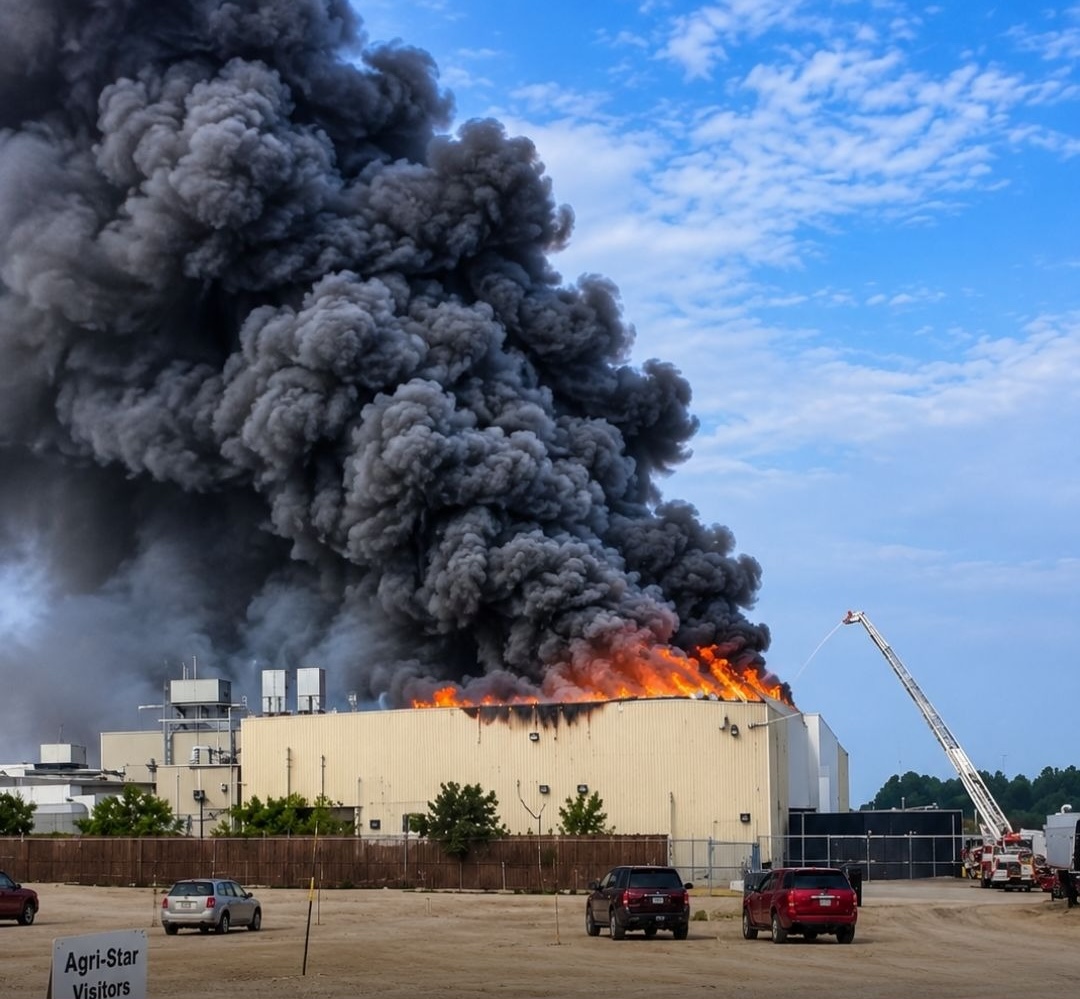
A major fire tore through the Agri Star Meat & Poultry plant in Postville, Iowa, before dawn on Tuesday, July 28, 2026, sending thick columns of smoke over northeast Iowa and drawing fire crews from departments across the region. This is not a local story for a small Iowa town. Agri Star is one of the largest kosher meat processors in the world and the leading American producer of Glatt kosher beef and poultry, which means what happens inside that plant reaches kosher kitchens, butcher counters, and supermarket freezers across the country. OU Kosher has already confirmed that the damage will pull a significant share of American kosher meat out of the supply chain, and that consumers should expect to feel it.
What We Know So Far
The Allamakee County Sheriff’s Office received a report of smoke coming from the plant at 3:56 a.m. Central time on Tuesday, July 28. The Postville Fire Department responded first, then called for mutual aid across county lines as the size of the fire became clear, with as many as 17 agencies ultimately assisting. Crews battled the blaze well into Tuesday afternoon, and the fire reignited in the early morning hours of Wednesday, July 29, before it was brought back under control.
No injuries have been reported. The cause has not been determined and remains under investigation. The plant sustained major damage. In a follow-up statement on Wednesday, July 29, Agri Star thanked the emergency personnel who responded and described the fire as devastating, a sharp shift from its first update, which had said crews were still working to contain an active blaze. Officials issued a smoke advisory across Allamakee, Fayette, and Clayton counties, and the city of Postville asked residents to restrict water use because of the volume being drawn to fight the fire. The Community Foundation of Greater Dubuque has opened a relief fund for those affected.
This is the second fire at the facility in recent months. A smaller fire broke out in the plant’s boiler room in May 2026 and was contained to that area. In February 2021, a propane explosion at the plant injured two workers.
A Plant That Feeds Kosher Kitchens Nationwide
Agri Star sits at the center of the American kosher meat supply. Hershey Friedman purchased the operation in 2009 from the Rubashkin family, taking over the facility that had operated for decades as Agriprocessors, the plant Aaron Rubashkin built into the largest kosher meatpacking operation in the United States. Under the Agri Star name, it has remained the top producer of Glatt kosher beef and poultry in the country.
It is also the economic backbone of Postville, a town of roughly 2,500 people. Agri Star is the largest employer in the area and provides parnasa for hundreds of workers, including many observant Jewish residents and the shochtim who make kosher production possible. A local Chabad emissary on the ground described a very heavy fire and said the community is deeply worried about the plant’s future.
OU Kosher: Consumers Will Feel the Squeeze
Rabbi Moshe Elefant, chief operating officer of OU Kosher, issued a public statement on the fire and its consequences for the kosher community, and he did not soften the picture. His first concern, he said, is the safety of the employees and firefighters at the scene in Postville.
On supply, Rabbi Elefant was direct. The damaged facility means a significant portion of the kosher beef and chicken slaughtered and sold in the United States will not enter the kosher supply chain, and kosher consumers will feel that tightening supply through reduced availability. OU Kosher, he said, is working closely with Agri Star and with all other suppliers to find solutions and ramp up production at other plants.
That assessment matters because of who is making it. The OU is the largest kosher certification agency in the world, certifying the majority of kosher food globally, and its read on the supply chain moves the entire industry. When the OU tells consumers in plain language to expect reduced availability, that is not speculation. It is the agency closest to the plants telling the community what is coming.
Could This Push Kosher Meat Prices Up?
Here is the question every kosher shopper should be asking. With OU Kosher now confirming that a significant share of American kosher beef and poultry will be pulled out of the supply chain, the supply side of the equation is no longer a guess. The open question is price, and that depends on how long Agri Star’s lines stay down and how fast other plants can absorb the gap. The early signs point toward an extended outage. The damage has been described as major, and a fire that burned into the afternoon and then reignited the next morning is not the profile of a plant that reopens in a matter of days.
The kosher meat supply chain has almost no slack in it. There are fewer than 25 kosher slaughter facilities in the entire United States, compared with more than 800 non-kosher plants. Kosher meat already carries a steep premium, and prices have climbed steadily for years. When one of the largest processors in that thin network goes offline, the whole system feels it.
There is a clear precedent, and it happened at this exact plant. In 2008, when the Postville facility was still Agriprocessors and was shut down after a federal immigration raid, the company was supplying roughly 60 percent of the kosher beef and 40 percent of the kosher poultry sold in the United States. Its shutdown triggered the worst kosher meat shortage in two decades. Butchers ran short by hundreds of pounds a week, and prices jumped, with some cuts like short ribs climbing from around 13 dollars a pound to nearly 17.
Two things make today different, and they cut in opposite directions. In Agri Star’s favor, the market is more diversified now than it was in 2008, and the OU is already coordinating with other suppliers to raise output. Processors like Alle Processing and Empire Kosher hold significant share, and history shows competitors can ramp up quickly to fill a gap, exactly as they did after the raid. Cutting the other way is the calendar. This fire broke out on July 28, roughly six weeks before Rosh Hashanah, which begins the evening of Friday, September 11, with Sukkot following on Friday, September 25. Demand for kosher meat spikes through late August and into September as families stock up for the chagim. A prolonged disruption at the largest Glatt kosher processor, landing right as demand climbs toward that peak, is the scenario most likely to move prices at the butcher counter. With major damage now confirmed, that prolonged disruption looks less like a worst case and more like the base case.
A Shortage Opens the Door to Kosher Fraud
The most important warning in the OU statement had nothing to do with price. When kosher supply tightens, it creates an opening for bad actors. Rabbi Elefant cautioned that limited supply gives unscrupulous individuals a chance to profit by preying on well-meaning kosher consumers, and that is not a hypothetical. Shortages are exactly when mislabeled product, tampered packaging, and phony or misapplied kosher symbols tend to surface.
OU Kosher is responding on two fronts. It is urging consumers to validate the kosher symbol and check package integrity on everything they buy, and it has instructed its mashgichim in the field to take extra caution during this period. For shoppers, the practical translation is simple. Confirm the hechsher is real and correctly applied before you buy. Make sure seals and packaging are intact and undamaged. Be skeptical of meat offered at prices that look too good while everyone else is short. If a deal on kosher beef seems to defy a national shortage, that is a reason to check the label harder, not a reason to celebrate.
What Kosher Consumers Should Do Now
Plan earlier than usual. If Agri Star’s lines stay down, the first sign will be specific cuts going scarce at butcher shops and kosher supermarkets over the coming weeks, not an immediate jump on the shelf. Families who rely on particular cuts for Yom Tov should buy ahead rather than counting on peak-season availability heading into Rosh Hashanah on September 11 and Sukkot on September 25.
Expect other processors to move into the gap. OU Kosher is already coordinating with suppliers to raise output elsewhere, and competitors filling shortages is what kept the 2008 crisis from becoming a total collapse. That is the main reason a full repeat is not guaranteed. Still, when supply tightens and demand rises into the chagim, prices tend to firm well before the holidays arrive.
A Fire in Iowa, Felt at Every Kosher Table
The kosher meat that shows up in Teaneck, Lakewood, Brooklyn, Miami, and Los Angeles runs through a remarkably small number of facilities, and Agri Star is one of the most important of them. That is why a fire in a town of 2,500 in northeast Iowa is a national kosher story, and why the largest kosher agency in the world weighed in within hours. The immediate concern is the safety of the workers and the future of a plant that hundreds of families depend on for their livelihood. Close behind is what a damaged Agri Star means for supply, prices, and consumer safety heading into the busiest kosher cooking season of the year.
In Postville itself, the fear is more immediate. The mayor has said no one yet knows what comes next for the town, and hundreds of workers are staring at an uncertain future while the plant that anchors the local economy sits damaged. A community relief fund has already opened for those affected.
This is a developing story. The cause remains under investigation, and no reopening timeline has been announced. We will update as the extent of the damage and the recovery timeline become clear.





Add Comment