










































New York City Mayor Zohran Mamdani signed an executive order on Wednesday directing city agencies to make publicly funded meal programs more religiously inclusive, with kosher and halal requirements named directly in the order.
City agencies serve more than 220 million meals and snacks each year to public school students, hospital patients, older adults, and New Yorkers in shelters, among others. “No New Yorkers should have to turn down a nutritious meal because it violates their religious practice,” Mamdani said in announcing the order.
What The Order Actually Does
Executive Order 25 directs the Mayor’s Office of Food Policy to issue citywide food guidance within one year, by November 2027. That guidance will set best practices for agencies serving New Yorkers who observe religious dietary restrictions, including kosher and halal requirements. It will cover third-party kosher and halal certification, clear labeling of meals and their ingredients, and annual surveys of the people who rely on city meal programs.
Agencies are directed to take all practicable steps to follow the guidance and to consider writing it into their food procurement contracts, but each agency keeps discretion over how it implements the standards. The order allocates no funding and sets no compliance deadline beyond the guidance itself, so nothing changes overnight. It builds on the updated NYC Food Standards that took effect in July and on Food Forward NYC, the city’s ten-year food policy plan.
Who It Applies To
The order covers meals purchased, prepared, or served by city agencies that are intended for New Yorkers whose diets are restricted by religious practice, and it directs agencies to take all practicable steps to have their contractors follow the guidance as well.
It names public schools, hospitals, older adult centers, correctional facilities, and homeless shelters among the settings where the city serves food. For the Department of Education and NYC Health + Hospitals, the order separately says the city will facilitate and promote their participation. It does not apply to private restaurants, supermarkets, caterers, or grocery assistance programs like SNAP.
For kosher consumers, the practical impact falls on anyone who relies on a city-run meal program and currently has to request a kosher accommodation with no consistent standard behind it.

Why Now
Advocates for both communities have pushed City Hall on this for years. A 2022 survey of 75 food pantries across the city found that only 38% supplied halal food, and halal-observant families have walked away from pantries with less food, or without protein, because the available options did not meet their dietary needs.
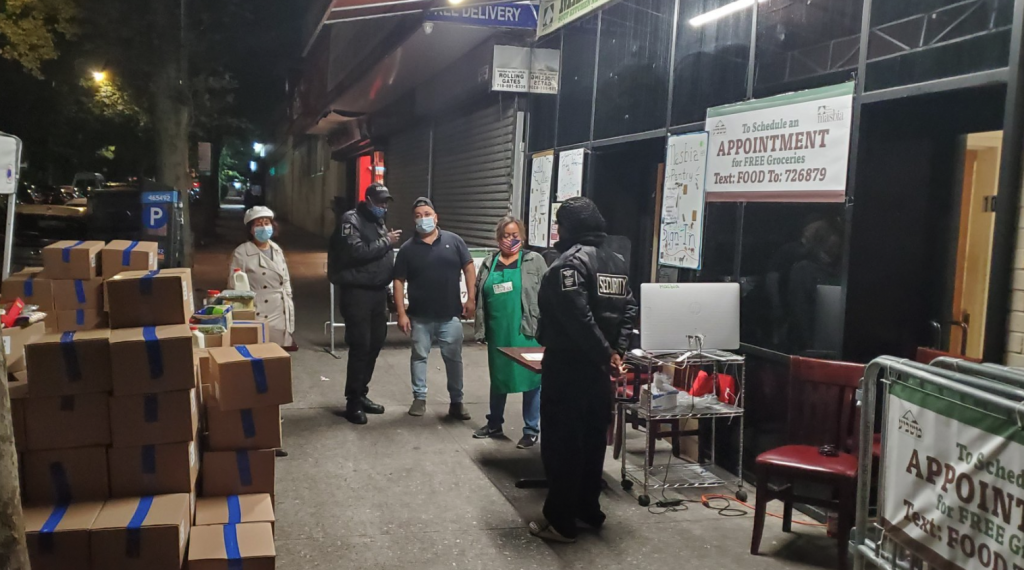
On the kosher side, organizations pressed the city to offer kosher grab-and-go meals at distribution sites during COVID, then pushed again over quality after residents received spoiled and even moldy food. Kosher soup kitchen networks like Masbia have kept expanding to meet the need on their own, most recently with a new food pantry in Manhattan.
What Jewish Organizations Are Saying
Agudath Israel of America welcomed the order while stressing certification. “We would expect any kosher food to have certification from a nationally recognized kosher certification agency,” said Rabbi Yeruchim Silber, the group’s director of New York government relations, adding that the organization will wait for the full policy to be published.
Rabbi Moshe Elefant, CEO of the Orthodox Union’s kosher division, said religious observance should not be an impediment to accessing nutritious food, and that the effort should seek options accepted by all of New York’s diverse Jewish communities.
Rabbi David Niederman of the United Jewish Organizations of Williamsburg and North Brooklyn said his coalition has spent years pushing for kosher options in city institutions, including glatt kosher meals for people in custody and kosher standards for Meals on Wheels. “No one should go hungry because they keep kosher,” he said.
What Happens Next
The Office of Food Policy has until November 2027 to draft and circulate the guidance, with input from religious communities and city agencies. Agencies carry it out through their procurement contracts and possible rulemaking, and the annual surveys will track whether the meals actually reach the New Yorkers who need them.
H/T FOX 5 NY





Add Comment